“The elderly person is first and foremost a person, an Other and Beyond.”
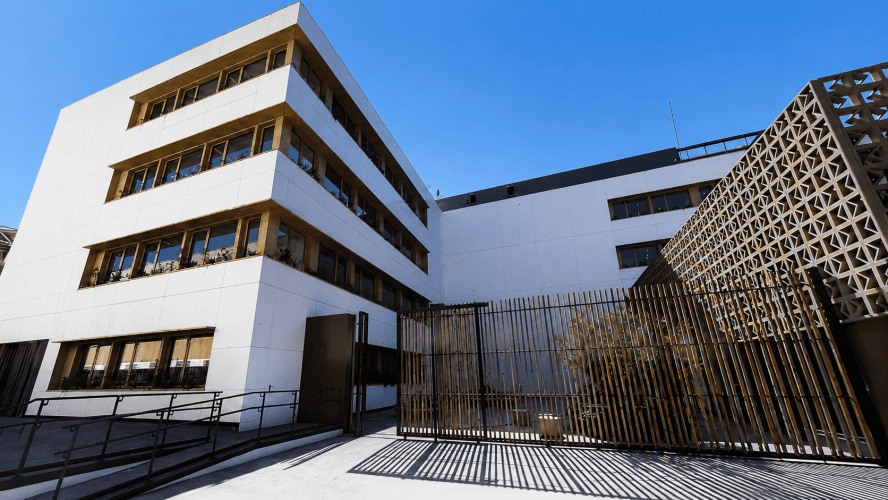
We introduce you to @Valentina Collevecchio, a psychologist at Casa di Riposo Villa Miramare, in Nettuno (Italy).
Why is care fundamental at all stages of life?
People often think old age is a somewhat unpleasant and secondary stage of life, not worth talking about. This is not true, not least because it can potentially be the longest part of life. Old age begins at 65, but many also live the fourth age to the full and reach the threshold of 100 lucidly. However, for those who have the privilege, the road is not easy: there is pain, illness, and grief (real and symbolic), but these are not stumbling blocks along the way because they are the road.
How long have you been a member of the Sisters Hospitallers?
My collaboration with the Sisters Hospitallers of Nettuno, specifically with Villa Miramare, dates back to seventeen summers ago, back in 2006. As is often the case with the important things in life, it was a meeting that happened quite by chance and a little out of mutual necessity. Since then, my role and my presence in the hospital community have greatly enriched and evolved.
What is your purpose and mission in helping the Hospitaller Sisters?
I deal with psychometric assessment, prevention, and treatment of cognitive impairment, as well as redacted reports. However, such activities are only “the tip of the iceberg”, because the work with older people is vast and deep. It is rooted in the family and the area to which the older person belongs. The question arose for me “What does a psychotherapist, and a psychoanalyst at that, do with such elderly and sometimes so committed guests? I found the answer with time, as it happens analytically. The psychotherapist, in this reality, sows, cultivates and gathers.
The older person is not usually like the iconographic Father Christmas, who was never young and will never really grow old. The older person is, first and foremost, in an advanced stage of life compared to his or her caregiver. He is neither “less” young nor “more” adult, he is Other and Beyond. That is to say, different and temporarily more advanced. In my work, in addition to the psycho-cognitive state of each guest, I also work on the acceptance of senescence, not only in the guests, but also in their families, and it is often more difficult with the latter. Sometimes relatives are not quite sure how to cope with the problems of old age and need to be equipped; sometimes, they need to be supported through painful and exhausting dementia and various illnesses.
With older people, the psychic work is unceasing. Growing old means to come to terms with “separation,” the “end” of many previously stable and established realities. Think of any chronic condition, which can irremediably separate a person from his or her state of health; widowhood, which always affects a partner; or leaving home; or, even more simply, separation from one’s motor autonomy.
In short, it is an integral, intense, and profound work that has only been possible thanks to the approach of the Sisters of this Congregation, who have always believed in, encouraged, and supported the centrality of the Person, and not only of the illness. The trust that the Sisters placed in the figure of the Psychologist in the geriatric context increased the areas and limits of my work with important, constant, and pleasing results (not only in terms of open-mindedness, but also in the rigor of the research). They guarantee, in my opinion, the construction of a high level of care.
Thank you, Valentina, for your testimony and your work in Sisters Hospitallers! Without professionals like you, all this would not be possible!