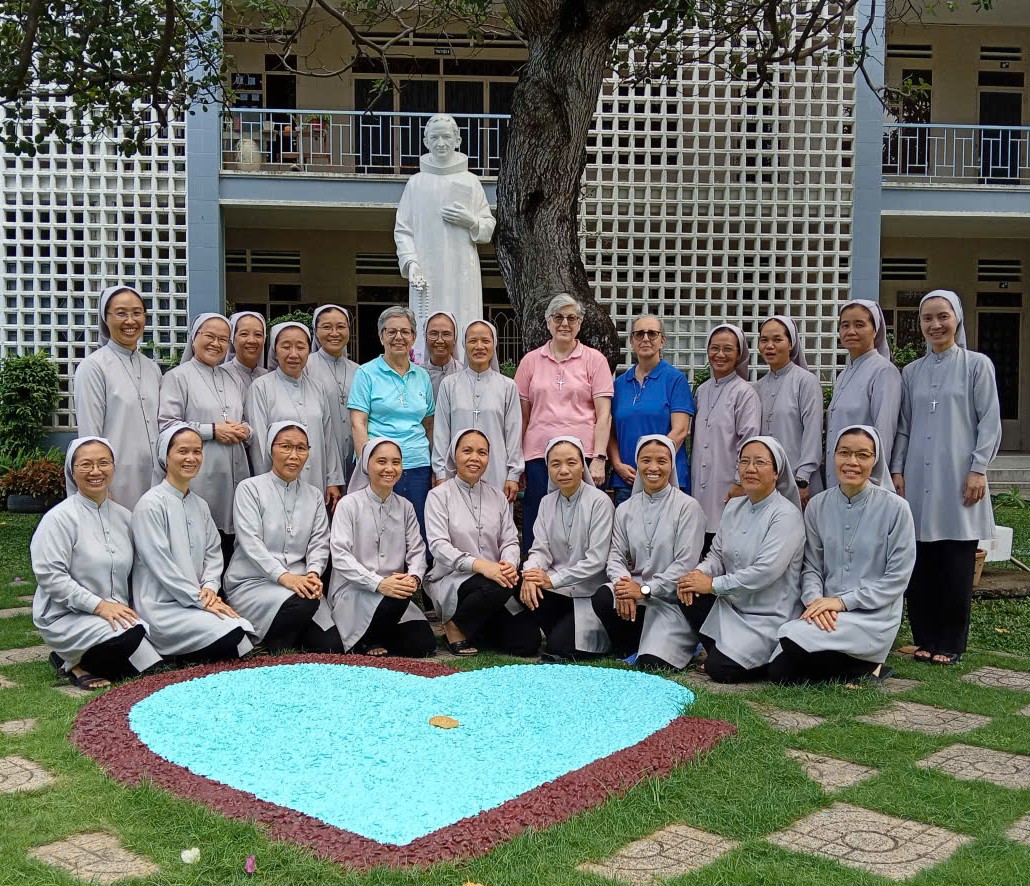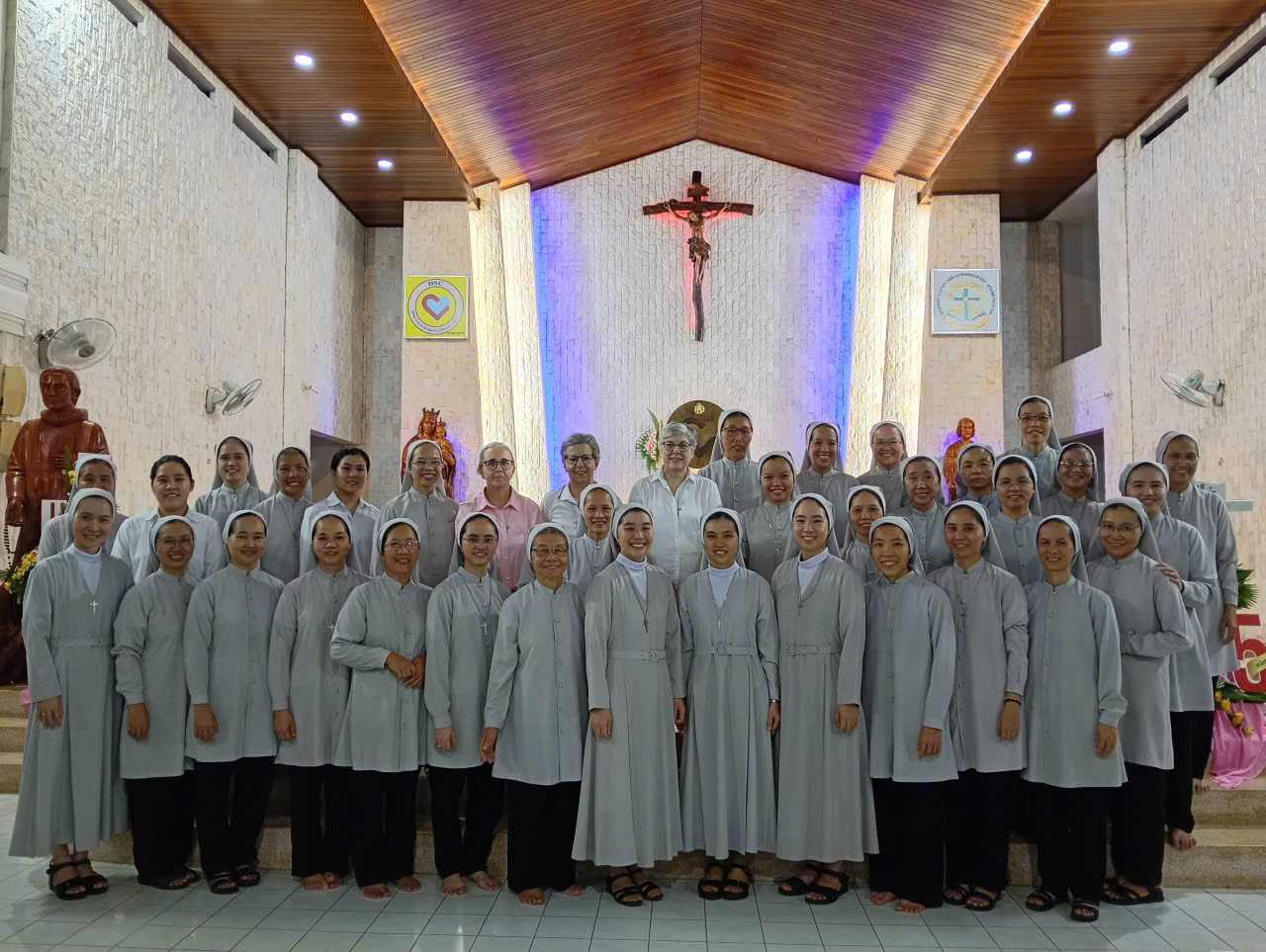
We introduce you to Sister Susana, novice mistress, responsible for the novitiate (formative stage that prepares the Sisters for the religious consecration in the Congregation), graduated in nursing and religious sciences.
Currently, she is in the residence of the sisters in the center of Condeixa-a-Nova (Irmãs Hospitaleiras Condeixa-a-Nova), where she is responsible for an international novitiate, a “global village” with sisters of different nationalities and cultures.
She did the school for formators in Salamanca “Josefinato”.
As mistress of novices and in charge of the international novitiate, can you tell us more about your daily work and how you prepare the Sisters for religious consecration in an intercultural environment?
In the mission entrusted to me as formator, I try to dialogue and discern with the Sisters of the team what helps the young women to move towards “being all of God” in the service of those who suffer. The intercultural environment is a richness, it is like having the “world” in the same house and, at the same time, it is a challenge to make each novice experience welcome and understanding so that she can abandon herself into the hands of the Divine Potter, who knows what needs to be modeled.
What do you consider to be the most rewarding aspect of accompanying new sisters on their journey of religious consecration?
One of the aspects that I consider most rewarding in this mission of accompaniment is to see them grow from within, to hear them share and recognize that God works wonders in the journey of each one. I feel very grateful to hear a strong experience of encounter with God, whether in prayer or in service to the “living images of Jesus”.
In addition to religious formation, what other aptitudes or qualities do you try to cultivate in the novices during their formation period?
The formation of a Sister Hospitaller is a path that leads us towards a progressive configuration with the compassionate and merciful Christ, seeking to think, love and desire like Him, which implies knowing oneself and developing the capacity for dialogue and discernment, cultivating hospitaller values such as sensitivity to the excluded and service, welcome, compassion, and hospitaller virtues such as charity, solicitude, availability and gentleness.
The formation is integral, taking into account all the dimensions: knowledge of themselves, relationship with God and with others, living experiences of service and attention to brothers and sisters who experience illness or need help.
Tell us about a significant experience or challenge you have faced in working with sisters from different cultures and how you approached it from a hospitality perspective.
One of the significant experiences of sharing life with young sisters from different cultures was discovering the importance of being grateful for a gesture or a gift, not only the day you receive it, but also the day after. It seems like a small thing, but it is valuable. With this experience I recognized that listening and offering space helps me to understand, to respect, to take off my shoes to welcome the mystery of the other. To allow myself to be evangelized by the seeds of the Gospel that are present and alive in other cultures.
How do you integrate your nursing training into your work of formation and spiritual accompaniment of the novices?
It is one of the aspects that enlightens us to reread and accompany the experience of service, of the practice of hospitality. What we do, speak and care for is Jesus himself, in an enriching sharing of so many actors, an interdisciplinary team that puts the person assisted at the center and embraces the mission with great dedication and professional quality. Sensitivity to the wounds we carry within us, some healed and others in need of healing. Gentleness in the approach, patience and hope help in the process.
In your opinion, what are the fundamental values and principles that guide the work of the Hospitaller Sisters in an increasingly diverse and interconnected world?
I believe that in such a diverse and interconnected world shines the light of our charism, which is hospitality, the matrix of the values that guide us: we are an open house, where those who arrive (even if they are strangers) feel welcomed, and we are also a shelter on the move when we go out to meet those who live on the margins. We observe the possibility that may be hidden and invent ways of mercy, liberation, healing and integration.
How do you think interculturality contributes to the global mission of the Hospitaller Sisters and to the reflection of the Sacred Heart of Jesus in caring for those most in need?
Interculturality lived in community contributes to the development of a willingness to go out of oneself and the attitude of welcoming and valuing difference as a richness. The union of hearts dreamed and lived by our first sisters and the relationship with God, which is communion, “leads us to discover the imprint of God in our own lives and in all creation” and, especially, to recognize God in the people we serve. (Constitutions, 11).
Jesus lived compassion and mercy, revealing the heart of the Father, sensitive to the sick and marginalized, healing, integrating and uplifting them. As a Congregation, we are one big family, expressing with our faces the depth of universality expressed by our Founder St. Benedict Menni: “This love has no limits, it cannot say enough”. (Letter 587)
We were born in different places, but all of us, as consecrated women, sisters to one another and servants of the sick, are apprentices of the Divine Samaritan, who cares for wounds and pours the oil of consolation on them, making everyone feel that “one person is worth more than the whole world”. (Letter 144)
What would you say to someone who is considering a vocation to the consecrated life?
I would just tell him that, if he feels his heart burning, it is good for him to take a break and dedicate some quality time to let himself be found and to share the feelings that are stirring in his heart. I would invite you to listen to God’s dream with sincerity and openness. Perhaps it would help to ask yourself this question that Maria Josefa and Maria Angustias asked themselves in their inner search:
We entrusted ourselves to the mercy of the Lord and asking for his help we said with tenderness: “My Jesus, what do you want from us? (Report on the Origins, p. 81).
Find out where your treasure is and you will find where your heart is.
Finally, can you share any important advice or lesson you have learned during your years of service in the Hospitaller Sisters?
One of the most important and beautiful lessons I have learned by living our “beautiful vocation of charity” (Letter 7) is related to service: How does the encounter with the suffering person become, by gift, an encounter with God?
God speaks to me without words, communicates so much to me without moving me and surprises me by wanting to welcome me into his heart. I feel small for having been chosen for such a beautiful mission, and very happy to feel that the Lord continues to call me to follow him and sends me to give myself totally to his service in hospitality.