Dr Michele Venanzi, coordinator of the Pastoral Care service at the Sisters Hospitallers’ “Villa San Benedetto Menni” in Milan, Italy, since 2012, discusses how interesting and challenging it can be to take charge, as a lay person, of an area traditionally relegated to members of a religious order and culturally considered secondary in comparison to other clinical and social health areas.

It is important to note that context can make a difference from a cultural perspective: carrying out pastoral duties at the clinic of a religious congregation is much easier than doing so at a non-Christian hospital, where spiritual care is considered little more than complementary to the huge work done by health care professionals.
Nevertheless, offering pastoral care to the health centre’s different departments remains a complex task. In fact, only recently has science considered a bio-psychological and spiritual approach to patient care to be valid. Previously, the spiritual aspect was not included as a dimension of medical care. A certain mentality still persists today in which spirituality and piety represent highly personal dimensions of the human being, to the extent that they should not be taken into account upon admission.
However, in time, a pastoral caregiver providing assistance, integration, and support to both professionals and patients may be viewed as a welcome addition, rather than an intrusion on conventional socio-healthcare structures. The approach helps reveal the extent to which the frailty of the human condition, tried and tested by the pain and confusion of disease, has the right to be considered the subject of care and attention, beyond the necessary medical interventions applied to treat a clinical situation.
It is precisely with this spirit and this mentality that the Houses in the province in Italy are implementing pastoral care that correctly addresses the specific needs of each centre, while being centrally coordinated thanks to the work of the Provincial Commission for Pastoral Care and Institutional Training.
Moreover, for many years now, the Commission has provided the opportunity for the pastoral coordinators of the Houses to meet (in person or online) in an effort to find common courses of action regarding both area training and the actions targeting the different departments at each centre.
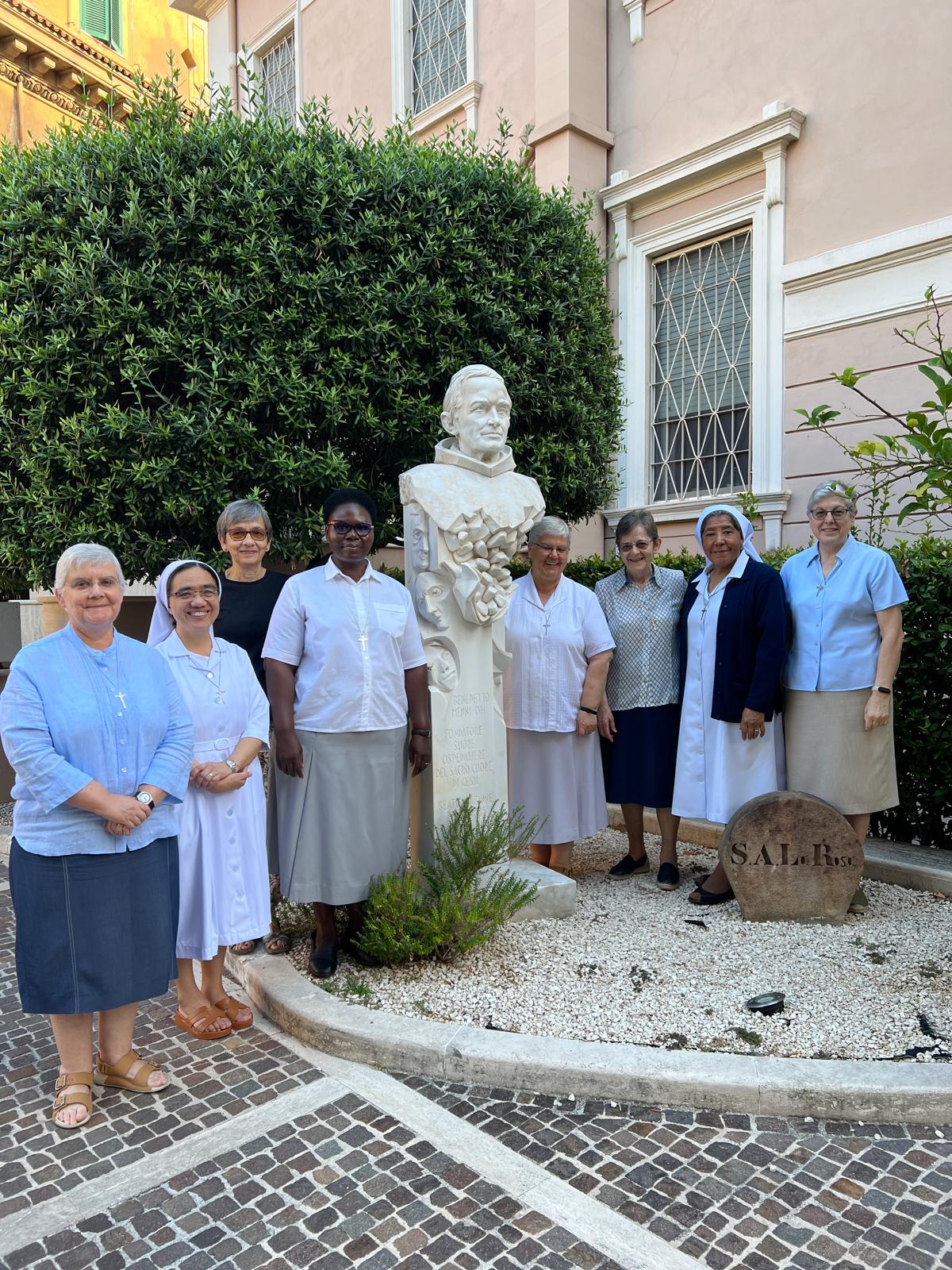
For myself and my colleagues, gathering at the Provincial House is very important, both symbolically and literally: to be reminded that we are all a part of a single Province and a single Mission helps us feel a sense of unity and we are more united in our crusade to perform Hospitaller work that is as “old” as it is “implicit.” Doing so as a layperson can be complex, but it is also very motivating and generates a great sense of responsibility, because it is precisely these pastoral paths that define the Institutional Identity we must preserve. Thus, we can be considered, still today, worthy perpetuators of Father Menni’s work.
Training and relational actions
Generally speaking, pastoral service promotes training and relational actions. With regard to training, the service offers courses and themed meetings on the Institutional Identity Framework and, specifically, Hospitaller values, particularly for newly incorporated collaborators who are fully immersed in a new reality, learning what it means to work at a Sisters Hospitallers clinic. The service is also responsible for organising scientific training events, in humanism and spirituality, which are of interest to those dedicated to spirituality, as well as those who contribute to the wellbeing of patients through a holistic or multidisciplinary approach.
From a relational perspective, pastoral services can range from spiritual care tailored to each patient or their family through pastoral dialogues focused on human intimacy and solace (and often compassion), to the organisation of small gatherings to address religious issues (i.e.: read the gospel) and discuss them in the context of each person’s life.
Moreover, we cannot discard the extent to which the pastoral service, in conjunction with the community of sisters, plans ceremonial occasions and events at important times of the year, from the liturgical season to the Congregation’s major celebrations. It is also important to involve patients and personnel in these religious events, which are an opportunity to meet, pray together, and renew our institutional identity.
To conclude, I would like to reassert that pastoral care is essentially a service whose mission is to build bridges between the different levels and areas of a centre. Pastoral care can serve as a bridge between the sisters and the collaborators, between the different departments of the House, between the Hospitaller Project and Hospitaller Identity, and, as the Founder was fond of saying, between Science and Charity. And considering how much Pope Francis appreciates the word “bridge,” none of this seems insignificant.