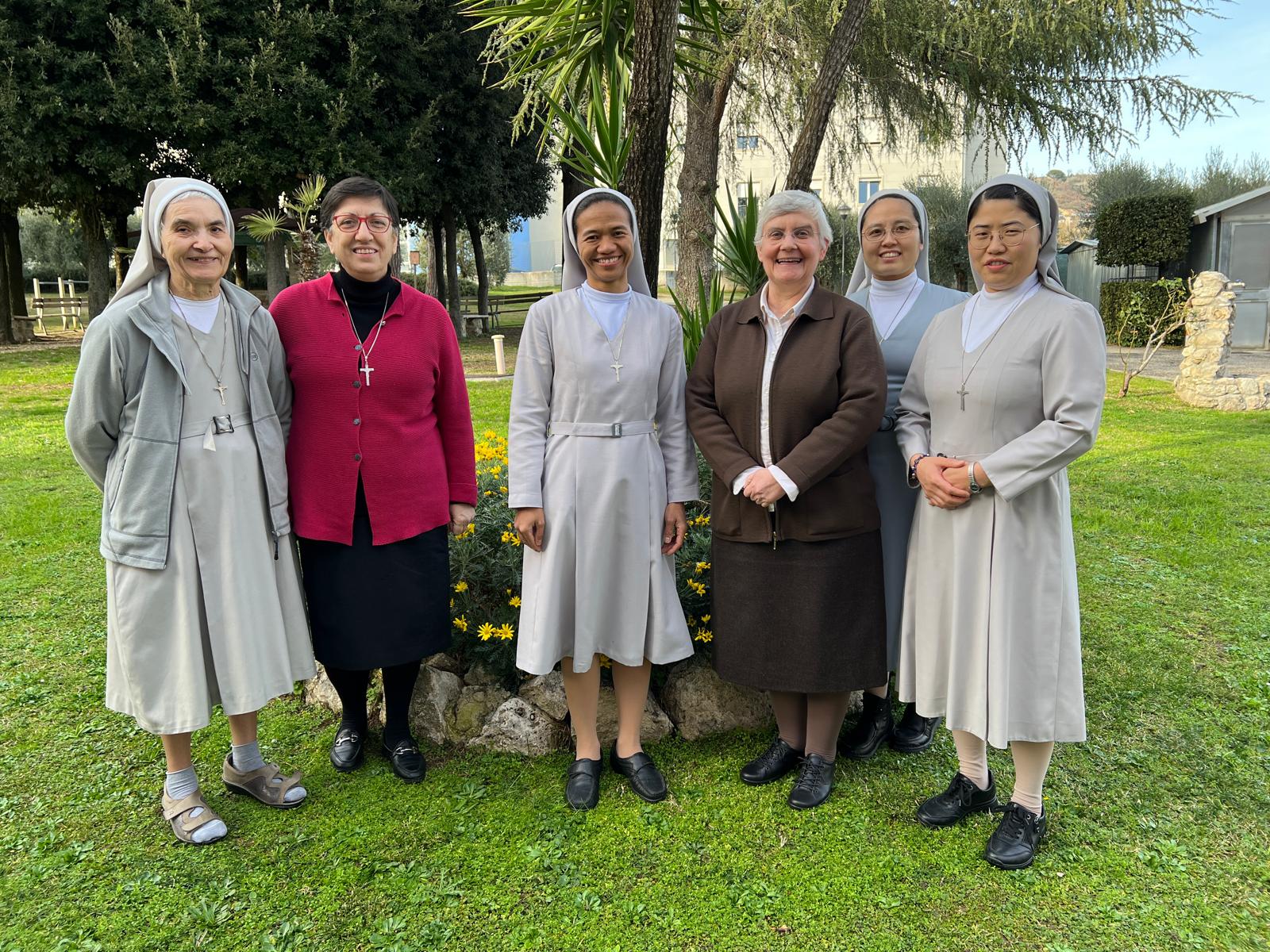
Did you know that the Sisters Hospitallers in Spain work to rehabilitate and care for people who have suffered brain injuries? Discover how the use of new technologies, robotics, and virtual reality provide clear benefits in their treatment.

My name is Marcos Rios and I am Coordinator of the Brain Injury unit at the Sisters Hospitallers’ Beata María Ana Hospital in Madrid (Spain).
In the hospital’s Brain Injury unit, we work with those who have suffered brain damage mainly through stroke, head trauma, or other causes of acquired brain damage. The consequences of an injury can be motor, sensory, cognitive, or emotional, and all affect the performance of a variety of daily activities, which can disrupt the family, social, and work environment. The incorporation of robotics and virtual reality in neuro-rehabilitation stems from the need to continue improving the treatment of patients suffering from brain injuries.
The use of new technologies, robotics, and virtual reality has obvious benefits that affect all treatment areas. In physiotherapy, it permits the repetition of movements, creating highly demanding situations (simulating stumbling or slipping in complete safety for the patient), as well as elements that simultaneously work the upper body in combination with cognitive stimulation. In speech therapy, communicators and computers are controlled with the eye, capturing ocular movement, or instruments to recover swallowing capability. In occupational therapy, robotic gloves with sensors help train fine motor skills and, by extension, improve the function of hands in daily life, an ailment with a more dire prognosis previously.
Lastly, in cognitive recovery, tele-rehabilitation platforms, cognitive stimulation, the use of large-scale screens, and virtual reality equipment open up an array of possibilities to improve attention, visual tracking, problem solving, etc.
This allows for a swifter recovery, optimising intervention times and providing more options to develop other skills throughout a lengthy rehabilitation process. The fact that cognitive elements are combined with upper and lower body exercise makes this a complete, challenging, and motivating activity for patients. Without a doubt, patients who realise they have access to the best technology for their rehabilitation will increase their level of involvement in the treatment.
While these tools do not replace therapists, they do allow time to reflect on the relevant aspects of rehabilitation and optimise the recovery capacity of each patient. Ongoing contact with them is irreplaceable.
Menni Brain Injury Network
Since 1992, the Sisters Hospitallers have operated various Brain Injury units at several centres in Spain, forming the Menni Brain Injury Network, which aims to rehabilitate patients with acquired brain damage and assist their families. As our rehabilitation approach evolves, it is possible that, in the future, biomedical engineers, physicists, and robotics specialists will join the treatment teams. It would be an obvious progression in improving rehabilitation and the high degree of customisation that the specialty requires.