We make available the newsletter Contigo March 2020, so you can read it in full. Don’t miss it!
Read full newsletter Contigo March 2020

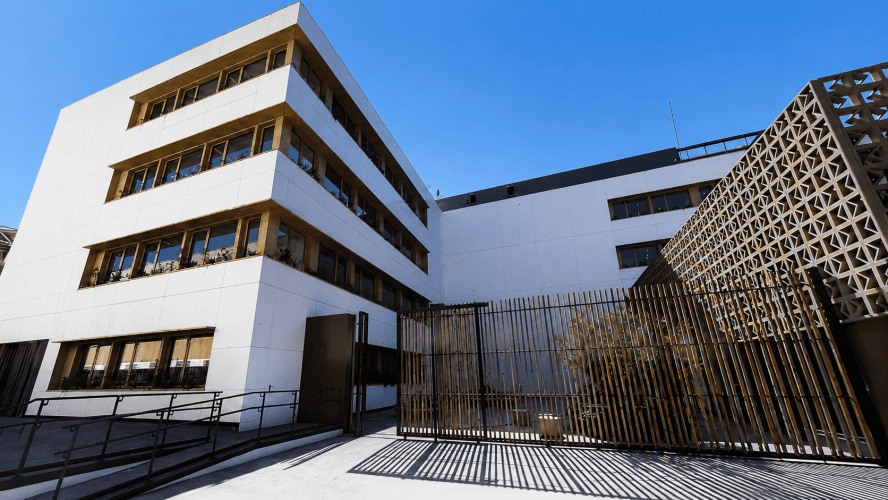
We leave you an interview, which is part of March 2020 Newsletter, with Alicia Ordóñez Banda, educator and collaborator of Sisters Hospitallers since 2003. In it she talks about her work with people affected by autism in the disability residence of Sisters Hospitallers in Arroyomolinos, Madrid (Spain).
What is autism? Which areas of development does it affect? Are there different types?
Today, when we talk about autism, we refer to people with autism spectrum disorders (ASD).
The most common effects of people suffering from ASD include difficulty communicating, limited social relations, and behavioural patterns characterised by limited interests, repetitive behaviours, and cognitive inflexibility that restricts social engagement.
As for types, they are differentiated by the level of severity and the skills affected. Occasionally, people with ASD also have a diagnosis of intellectual disability, as is the case with our residents.
There is also Asperger’s syndrome, which is used to describe high-functioning individuals with this disorder but who display different traits, such as limited social interaction with peers.
Effectively, these are individuals who concentrate on their interior world, gradually losing contact with external reality.
Broadly speaking, the centre serves which type of profiles? How many people are currently receiving care?
At the centre, we serve a total of 210 people, 20 of whom are autistic. Though this group represents a small percentage of the whole, their care is very specific and specialised. Their quality of life can improve greatly with the appropriate support, services, and treatment.
What type of care do these individuals receive and what kinds of resources does the centre have?
The approach is comprehensive and interdisciplinary. We rely on support from various professionals (educators, psychologists, assistants, nurses, therapists, psychiatrists, etc.), who work with specific programs of basic activities for daily life (dressing, eating, personal hygiene, etc.) and who conduct occupational therapy sessions in classrooms and workshops. We also work on regulating wait times, internal and external mobilisation, inclusive leisure activities, relaxation, sleep hygiene, positive behavioural feedback, personalised planning, sensory stimulation (Snoezelen room), canine therapy, and communication support systems using pictograms, communication notebooks, visual cues, etc.
In general, how has caring for people with autism evolved in recent years? What are the centre’s main achievements?
Today there is a greater commitment on the part of public administrations and institutions to improve the quality of care for people with ASD. We are moving toward an increasingly inclusive and participatory model by creating more community-oriented structures.
At our centre, in particular, the first residents with ASD arrived in late 2015, so our experience only began recently. Since that time, we have grown together as a team and there is a clear before and after in our professional lives. We have had to rethink part of our working method. After the initial breaking of the mould, we began to focus distinctly on each individual and their specific characteristics.
Our aim is to ensure people with autism are protagonists in their own lives by providing security and offering them communication tools to reduce the number of outbursts, boost self-esteem, and assert the “I” within a group of peers.
At our centre, we are proud to say that we are continually progressing, converting our surroundings into a true home that is accessible in every way.
The centre also offers support services for family members, who play a pivotal role in the lives of those with autism. What do those services consist of and what benefits do they provide family members?
Because we believe family is integral to providing true care, we have established various communication and coordination channels between family members and professionals.
We offer weekly tutorials, telephone follow-ups, therapeutic sessions, and a quarterly workshop specifically for family members, where we address matters of importance to them, as well as issues related to the needs of residents.
These activities involving family members enhance the quality of life for our residents by helping to create a climate of transparency, mutual trust, involvement and commitment.
Where should we focus our efforts in order to achieve real social inclusion and rehabilitation for people with autism?
It is everyone’s responsibility to keep moving forward to achieve the full integration of people with ASD. This includes political and legislative changes that guarantee their rights, as well as the provision of resources and support for people with ASD, their families, and the centres that provide care, until a true cultural change, that results in total inclusion (research, participation, etc.), is attained.
Let us adapt to their needs, enhance alternative communication systems, facilitate that all-important transition from child to adult. Let us work to structure their days, to create a schedule together, and ensure our gaze and our closeness make them happier.