Sr. Espérance Sona, Sister Hospitaller in Dampaong (Togo) tells us an impressive testimony: CHRISTMAS, WITH CHILDREN OF SICK CHAINS IN THE CAMP: “CAMP DES PRIÈRES”.
30 km from Dapaong, in the north of Togo, a sad reality hides in what is known there as a “prayer camp” where the mentally ill are chained.
45 children live in this place, together with their parents, which makes us discover a chained manger this Christmas season. Some were born there, out of school, malnourished and still sad. Others, on the other hand, were “taken there by their parents because they are ill, have epilepsy or have no one at home to take care of them.”
Faced with this reality, how can we talk about Christmas to children who see their parents in this state: chained, beaten? With what words can we tell these children that Christmas is their feast, that the Son of God was born, a child like them, and that he came to save us? How can we bring joy and smiles back to these children whose house is at the foot of the trees? How are they going to thrive in such an environment?
The hospital mission appropriates the fragility of others, it does not allow a society of exclusion to emerge, but rather approaches and then rehabilitates the one on the ground.
Sisters and collaborators, we echo this concern insistently, we listen to the cry of the men, women and children who are in these existential frontiers and we commit ourselves to liberate them (XXI C.G. 21).
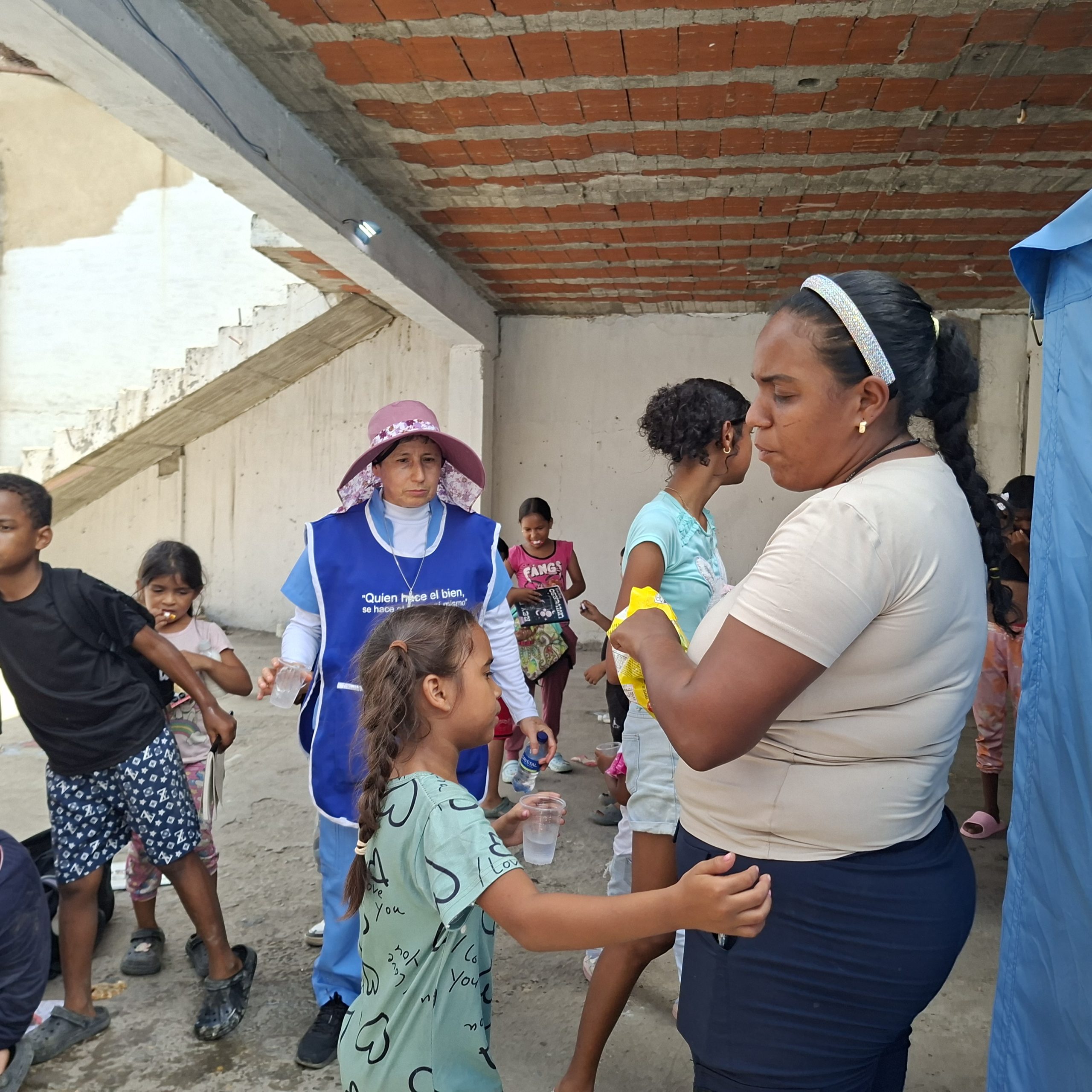
On Sunday, December 27, we went to see these children and we brought each one a kit (clothes, cookies and toys) as well as a plate of rice with meat and a bottle of juice. We explain the protection measures to prevent the spread of COVID-19 and distribute masks to everyone. Some patients who were also chained received a meal each, because while they are there, our hearts are also chained and we cannot allow anyone to remain “on the fringes of life.” This makes us so unworthy that we lose our composure. (FRATELLI TUTTI .68)